





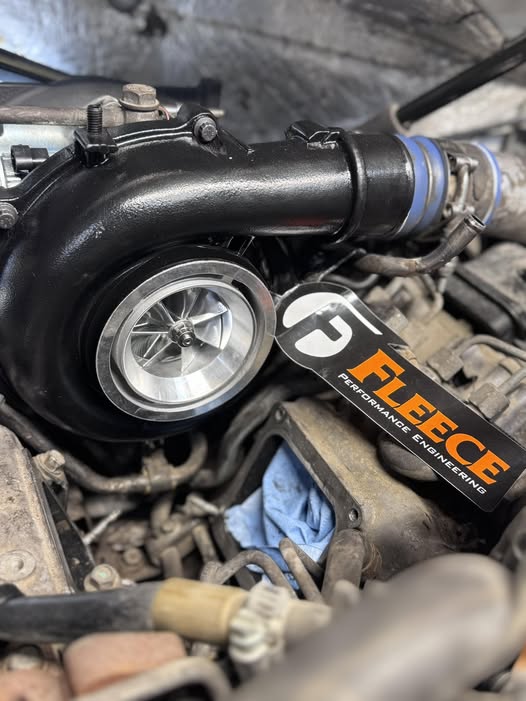
Pro Tip: Boost Leak your Turbo after installing it.
Our technical service team recommends running a diesel turbo boost leak test after installing a turbo. This test involves pressurizing the intake system to find air leaks between the turbocharger and the engine cylinders. It's worth the time to avoid reduced power, poor fuel economy, increased exhaust gas temperatures (EGTs), and turbo lag.
Grab a boost leak tester and a bottle of soapy water and follow along:
Grab a boost leak tester and a bottle of soapy water and follow along:
- Prep the Vehicle: Ensure the engine is completely off and cool. Remove the air filter and intake tube so the turbo compressor inlet is exposed.
- Install the Tester: Secure the boost leak tester onto the turbo inlet using a heavy-duty silicone coupler and T-bolt clamps.
- Plug Other Openings: If your system has any crankcase vent lines or PCV ports tied into the pre-turbo intake tract, make sure to plug them so air doesn't escape out of them.
- Pressurize the System: Attach your air compressor's chuck to the tester's valve stem and slowly pressurize the system. Never exceed 20 to 25 PSI (or your vehicle's factory max boost level) to avoid blowing seals or hoses off.
- Listen for Leaks: With the system pressurized to about 15–20 PSI, listen for hissing sounds.
- Spray Soapy Water: Spray a mix of soap and water on all the intercooler boots, clamps, gaskets, and plastic charge pipes. Watch for growing bubbles to pinpoint tiny leaks.
Tags
turbo
IMPORTANT: We will not be shipping product between the dates of July 5th and July 11th. All orders will be processed and shipped the week of July 12th.
While we are closed take advantage of 5% off MSRP!